Types of Communication Disorders: Speech, Language, Cognitive-Communication & More
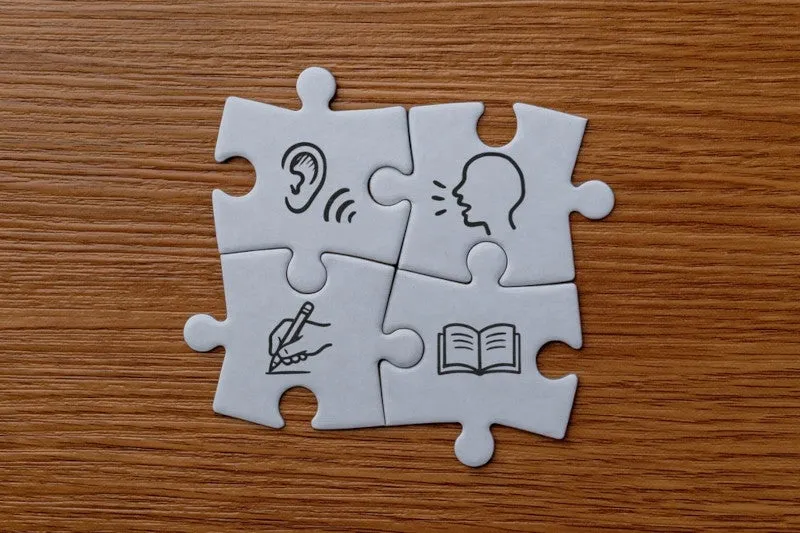
Communication disorders affect an individual’s ability to share their thoughts, feelings, and ideas. Many such struggles are identified in childhood, such as trouble making speech sounds. Other communication disorders may appear later in life, such as language impairment as a result of a stroke or brain injury, or a cognitive-communication loss through a brain injury, Parkinson’s disease, or Alzheimer’s disease.
Speech-language pathologists (SLPs) diagnose and treat people with communication disorders. While SLPs treat patients across the lifespan, more than half work with children in educational settings, serving the approximately one in 14 (7.2 percent) of American children between the ages of three and 17 who have had a voice, speech, or language disorder in the past year. Such disorders are most common in young children and are less frequently found as children enter their teen years. While speech disorders are typically remediated in childhood, some persist into adulthood, creating significant demand for SLPs who work with adults. For example, approximately one percent of Americans stutter. Most of them outgrow the condition in childhood, but one in four will continue to stutter throughout their adult lives.
Consider how various communication disorders are categorized, their symptoms, and how SLPs diagnose and treat them.
How are communication disorders categorized?
Experts generally group communication disorders into four categories:
- Speech disorders
- Language disorders
- Hearing disorders
- Central auditory processing disorders (CAPD)
While these categories are distinct, people who have one type of communication disorder may have a higher likelihood of experiencing another as well. For example, children with delayed communication skills in toddlerhood are more likely to experience language-based learning differences, such as dyslexia.
Speech Disorders
Speech disorders affect an individual’s ability to create the sounds that form words. Speech disorders include fluency disorders, which impact the speed and cadence of speech, as well as speech sound disorders. Speech disorders also encompass disorders that affect various aspects of the voice, such as pitch and volume.
Fluency Disorders
Fluency disorders affect the flow of one’s speech. Individuals with a fluency disorder experience frequent, repetitive interruptions in the flow of their speech.
Stuttering is a fluency disorder in which speakers unintentionally repeat or prolong words. Some people who stutter also experience blocks—abrupt stops or stretches of silence. Cluttering is also a fluency disorder characterized by speaking in rapid bursts, collapsing words so that they lose middle syllables, pausing in atypical places, and using a high number of filler words such as “um” or “uh.”
Healthcare providers, namely speech-language pathologists (SLPs), diagnose communication disorders, including fluency disorders. Treatment techniques include speech strategies, breath control, and the reduction of physical tension. People with fluency disorders may also benefit from learning to insert natural pauses into their speech and from counseling to process the complex emotions that speech disorders can create in social settings.
Speech Sound Disorders
Speech sound disorders often affect young children who are learning to speak. This may sound like a child struggling to make a “-th” sound or saying “w” instead of “r.” While these errors are common in very young children, those who struggle to outgrow them may have a speech sound disorder.
Speech sound disorders include both articulatory disorders, in which a person struggles with the physical production of a sound (such as speaking with a lisp on the letter “s”), and phonological disorders, which are pattern-based problems in which a speaker comprehends how to make a sound but does not follow the correct speaking patterns (such as leaving the ends off of words).
SLPs treat individuals with speech sound disorders through targeted therapy that emphasizes the proper way to produce a physical sound and correcting ingrained patterns of sound errors. Over time, the pathologist and patient will progress from working on individual sounds in isolation to integrating proper speech sounds into sentences and full conversations.
Voice Disorders
Voice disorders are medical conditions that affect the production of a person’s voice, including issues with their pitch, volume, and sound quality. People with voice disorders may find it difficult or painful to speak as the vocal cords, larynx, nerves, or muscles that contribute to vocal expression are not working properly.
Voice disorder conditions include:
- Vocal cord nodules, polyps, and cysts
- Paralysis of the vocal fold
- Muscle tension dysphonia
- Vocal cord dysfunction
- Chronic hoarseness
SLPs treat individuals with voice disorders in several ways. They often educate patients on vocal hygiene, including hydration habits and strategies to eliminate damaging practices. They may also work with their patients through resonant voice therapy, vocal function exercises, and manual laryngeal massage.
Language Disorders
Language disorders negatively affect how a person comprehends and uses spoken or written symbols for communication. These disorders may affect how a person expresses themselves, processes others' words, or interacts with others in social settings.
The American Speech-Language-Hearing Association describes several types of language disorders, including:
- Expressive language disorders: Individuals struggle to share their thoughts, ideas, and feelings. They may have a limited vocabulary or be unable to build sentences correctly.
- Receptive language disorders: Listeners have difficulty comprehending or processing the words of others.
- Mixed receptive-expressive language disorders: Individuals have difficulty both understanding and producing spoken words.
- Spoken language disorders/development language disorders (DLD): One of the most common developmental disorders, affecting approximately one in 14 kindergartners, DLD negatively affects learning, understanding, and using language. DLD language difficulties cannot be explained by other conditions such as hearing loss or autism.
Speech-language pathologists treat language disorders through tailored intervention strategies. These strategies may include interactive play that allows the SLP to observe both verbal and nonverbal communication, social communication exercises, and parent education.
Hearing Disorders
Hearing disorders are conditions that lessen a person’s ability to perceive or process sounds. These disorders include physical hearing loss in which a person has temporarily blocked or permanently damaged hearing systems.
SLPs often work alongside audiologists to treat patients with hearing loss. Audiologists diagnose and medically treat physical hearing problems, while speech-language pathologists work with patients to address how hearing loss impacts communication and language.
Speech-language pathologists treat the communication impacts of hearing loss through practices such as aural rehabilitation, speech therapy, and auditory training. They may work with patients on listening strategies, learning how to use communication technology such as hearing aids, or improving speech clarity.
Central Auditory Processing Disorders (CAPD)
Central Auditory Processing Disorder (CAPD) is a neurological condition. People with CAPD struggle to process or interpret spoken sounds and words properly. These individuals have healthy physical hearing, but their central nervous system has difficulty processing auditory signals. This makes it difficult for people with CAPD to understand spoken language in several ways, including:
- Difficulty comprehending speech when there is background noise
- Struggling to determine the source of a sound or voice
- Difficulty following multi-step verbal instructions.
While CAPD does not have an exact known cause, it is correlated to neural pathway dysfunction in the brain. People who have a history of chronic ear infections, significant head trauma, or brain injury are at a higher risk for CAPD. CAPD often co-occurs with learning disabilities, dyslexia, ADHD, and autism.
Speech-language pathologists first work with patients who have CAPD by assessing how individuals process language and attach meaning to auditory signals. They then target language skills, addressing phonological awareness and reading decoding strategies that correlate to auditory signals. They may work on active listening routines and breaking down tasks to help patients interpret verbal directions.
How do you become a speech-language pathologist?
The first step toward becoming a speech-language pathologist is earning a bachelor’s degree. Most SLPs earn their bachelor’s degrees in communication sciences and disorders. Others choose an alternative bachelor’s degree program while ensuring they complete master’s-degree prerequisite courses in communication science and disorders as well as biological, physical, social, and behavioral sciences.
Following their bachelor’s degree, aspiring SLPs must earn a master’s degree in speech-language pathology or communication sciences and disorders. The master’s program should include didactic coursework, offer supervised clinical experiences, and be accredited by the Council on Academic Accreditation in Audiology and Speech-Language Pathology (CAA).
Following their master’s degree program, graduates will take the Praxis Speech-Language Pathology Exam and complete clinical experience under the supervision of a licensed speech-language pathologist. Upon meeting the state’s education and clinical experience requirements, individuals are eligible to apply for licensure through the state licensing board in the state where they plan to practice.
Prepare to Treat Communication Disorders with an M.S. CSD Online from Elmhurst University
Do you want to help people who are struggling to communicate their thoughts, feelings, and ideas?
Elmhurst University’s part-time online M.S. in Communication Sciences and Disorders will equip you as a skilled, compassionate leader in the field of speech-language pathology. Our career-focused curriculum offers advanced training and teaches clinical techniques through specialized courses that include linguistic and cultural issues.
As one of the few fully online CSD programs in Illinois, our program goes far beyond foundational competencies through Elmhurst’s Circles of Excellence framework, which emphasizes six essential qualities for clinicians and 400 experiential hours. Students prepare for diverse clinical settings in Elmhurst’s state-of-the-art simulation center during short, in-person immersion experiences.
Take your career to the next level with Elmhurst University’s online M.S. in Communication Sciences and Disorders.
Frequently Asked Questions
Communication disorders are commonly grouped into speech disorders, language disorders, hearing disorders, and central auditory processing disorders. A person may experience more than one type.
A speech disorder affects the production, flow, or quality of spoken sounds, while a language disorder affects understanding or using spoken or written symbols. Assessment determines the specific pattern and appropriate treatment approach.
Central auditory processing disorder is a neurological condition in which a person has healthy physical hearing but difficulty processing or interpreting auditory signals. It can make speech in noise, sound location, and multistep verbal directions difficult.