ABSN vs. BSN: Is an Accelerated Nursing Program Worth It?
Blog Updated on December 5, 2025.
If you are considering changing careers to become a registered nurse (RN), you might be wondering what an accelerated nursing program is. These may include an Accelerated Bachelor of Science in Nursing (ABSN) or a direct-entry Master of Science in Nursing (MSN). You might also want to know the key differences between ABSN vs BSN programs.
Becoming a nurse is a significant time commitment, but for most, the rewards of pursuing a passion for helping others and giving back to the community make it worthwhile. If you are thinking about changing from a non-nursing career to nursing, it helps to have a roadmap outlining the steps you’ll need to take and the environment you’ll be entering.
Accelerated Options to Consider
People who have a bachelor’s degree in a field other than nursing and are looking to switch careers have several educational options:
- You can enroll in a traditional four-year Bachelor of Science in Nursing (BSN) program.
- You can enter an Accelerated Bachelor of Science in Nursing (ABSN) program. This type of program, which is frequently offered online, focuses on nursing practice, theory and clinical education. It is “accelerated” because completion of this type of BSN program generally takes less than two years.
- The third option is a Master’s Entry in Nursing Practice (MENP) program, another program designed for those who already have a bachelor’s degree. Graduates of this program earn a Master of Science in Nursing (MSN). This type of program can also be completed in less than two years.
Read more to answer the question at the top of many students’ minds — are accelerated nursing programs worth it?
Accelerated vs. Traditional Programs: Some Key Differences
When you are evaluating the kinds of programs that provide entry into professional nursing, there are important differences. The length of time from the start of enrollment to the completion date is one major difference. But you will also have to factor in such things as the costs of room and board or commuting to campus. The comparison chart below gives you a quick overview of ABSN vs. BSN programs, as well as the MENP program at Elmhurst University.
| Traditional BSN | Online Accelerated BSN (Elmhurst University) | Online Direct-Entry Master's (Elmhurst University) | |
|---|---|---|---|
| Entry Requirements | High school diploma or GED | Bachelor’s degree in a non-nursing discipline with a 3.0 cumulative GPA | Bachelor’s degree in a non-nursing discipline with a 3.2 cumulative GPA |
| Prior Nursing Experience | None | None | None |
| Course Prerequisites | None | Completion of specific college-level courses | Completion of specific college-level courses |
| Term Starts | Fall | Fall and Spring | Fall and Spring |
| Term Breaks | Traditional calendar with breaks | No semester breaks | No semester breaks |
| Completion Time | 4 Years | 16 Months | 20 Months |
| Instruction Method | Classroom lectures | Online coursework with some synchronous log-in times | Online coursework with some synchronous log-in times |
| Skills Labs/Simulations | Incorporated throughout the semesters | Residency at the beginning and end of the program | Residency at the start of the program |
| Clinical Rotations | Usually at an affiliated hospital | Arranged at locations near the student's home under the supervision of a licensed RN | Arranged at locations near the student's home under the supervision of a licensed RN |
How Accelerated Programs Have Grown
In the 1990s, nursing schools developed accelerated nursing programs to attract people with bachelor’s degrees who wanted to enter nursing. Initially, there were about 30 such second-degree nursing programs in the United States. As of 2024, the American Association of Colleges of Nursing (AACN) counted 330 accelerated BSN programs in the United States and Guam. The AACN notes there are currently a combination of 104 accelerated or entry-level master’s programs, with 16 more in development.
Student enrollment in these programs has grown steadily. An AACN survey in 2024 showed that there were 27,706 students enrolled in accelerated baccalaureate programs. This number represents a jump in enrollees from the previous year’s enrollment of 25,869. Master’s-entry programs have seen similar increases: In 2023, there were 9,318 students enrolled and by 2018, the count had grown to 10,335 students.
ABSN vs. BSN: Finding the Right Path
ABSNs and BSNs both prepare nurses for rewarding, impactful careers in the health care sector. Because programs like an ABSN or MENP are newer than traditional BSN programs, they may appear to be completely different credentials with different approaches to learning.
However, when comparing an ABSN and a BSN, the core elements remain the same: detailed instruction from experienced nurse educators, hands-on training in simulated situations and support from experienced RNs. While ABSN programs take less time and typically feature online coursework, the degree is still built around the commitment to providing you with a high-quality education and preparing you to make a positive impact in a crucial field.
ABSN programs mean that students study on their own schedules, balancing other obligations. Because they are remote, they allow students to pursue their career goals without uprooting their families. And the accelerated timeline means that you can become a working nurse in half the time.
Is an Accelerated Nursing Program Worth It for You?
When choosing an online ABSN or MENP, it’s important to know what the program will require, if it suits your goals and if there are any potential ABSN scholarship opportunities you can apply for. Understanding how online programs work will help you see if your learning style and lifestyle are suited for this learning format.
Can You Work While in Nursing School?
Most online accelerated BSN programs are academically rigorous and require a commitment of 8-12 hours per day to go over lectures and study materials, and 1-2 days per week of clinical rotation.
When comparing traditional BSN vs accelerated programs, the compressed time frame of an ABSN program allows you to enter your nursing career faster. However, this means working, even part-time, is discouraged as the program requires your full attention. High-quality online programs have been specially designed to provide a supportive learning environment so you can enter the field in under two years.
How Do You Study in Nursing School?
If you are organized and self-directed, you can review lectures and materials on a schedule that you set for yourself. There will be established weekly deadlines for assignments, so having good time management skills will be crucial.
David Schultz, a student from Elmhurst University’s online ABSN program, describes his reasons for choosing an online program.
“It gave me the options to pick and choose how to break up my own day. It was nice to have the option of, ‘Okay, I can work on this homework all morning, and then I can take a break, and then I can do some personal stuff to break my day up, and still have that school-life balance,’ if you will. That was one of the biggest things for me.”
Hear David Schultz’ full student testimonial below:
Do You Make Friends in Nursing School?
While not as easy as meeting after a class you attend in person, you will have time to work with and get to know your fellow students through videoconferencing, online projects and study sessions. In fact, because student enrollment isn’t limited by location, you’ll be able to tap into a geographically wider network.
"My classmates were phenomenal. They were absolutely fantastic, intelligent, hard-working people that brought extremely variable experience to the table. And then when we came in for lab simulation, we felt like we knew each other. We really bonded as a group and we made some really close friendships."
- Molly Blackall, ABSN Graduate
If I Have Questions About the Coursework, Who Do I Reach Out To?
Your strongest learning relationship will be with the faculty, many of whom are working nurses themselves. Outside of the lectures, online students can contact professors via email or videoconference. Because they understand that students are working remotely, professors are very attuned to the fact that online communication forms the main point of contact and therefore, they are very responsive. Dedicated student advisors can also help you navigate the university services and help keep you on track.
Your Path Through the Program
Once you are accepted into an online program, your work will fall into two broad categories: didactic coursework (lectures, homework, peer projects, etc.) and clinical competencies (skills needed for direct patient care). Overall, there are four major components to completing your education and becoming a registered nurse.
1. Mastering the Curriculum
In courses that cover such varied topics as pathophysiology, nursing theory and population health, students preparing for a second career as an RN will expect to find the following themes addressed in their program:
- Concepts and theories of nursing: Essential theories and knowledge of nursing, highlighting basic care principles. These theories dive into the systematic framework driving patient-focused care and specific elements of adult care delivery, including chronic illness and palliative care.
- Communities and vulnerable populations: Study the principles of population health to understand health factors as they relate to epidemiology, environment and social determinants of health.
- Health care systems and leadership: You will learn about organizational systems and leadership, health care policies and advocacy as they relate to professional nursing practice. Concepts pertaining to more efficient care delivery strategies, such as evidence-based decision-making, are also covered.
- Direct patient care: You will develop clinical judgment and decision-making skills through laboratory experiences and supervised clinical experiences. You will also build competencies for the care of patients of all ages and diverse populations. Additionally, you will examine holistic influences on individual health, from socioeconomic to genetic factors.
For master’s candidates, there is often additional coursework on clinical nurse leadership. Education on nursing concepts and theories from a systems perspective, plus leadership training in communication, management and social responsibility, prepares you to take the Clinical Nurse Leader certification exam.
2. Practicing Hands-On Skills During Campus Residency
RNs play a critical role in health care delivery and need to understand patient-care skills, care prioritization and the variety of settings in which patients receive care. Through your online coursework, you will learn the principles behind these skills, but having an opportunity to learn in a hands-on environment will cement your knowledge.
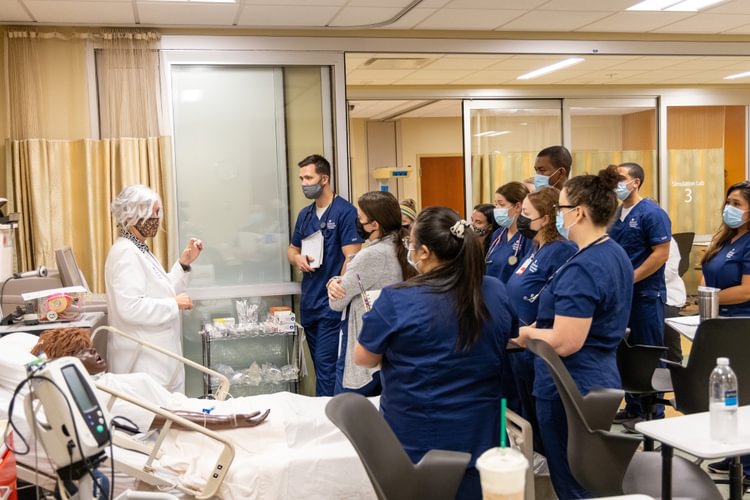
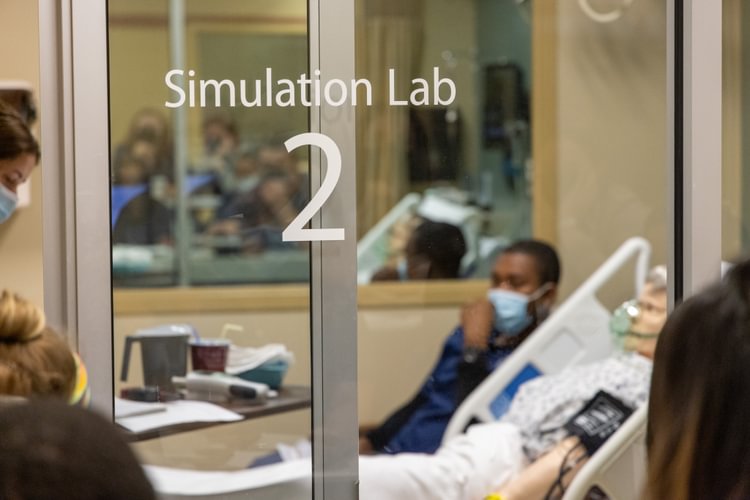
Hands-on learning will take place under two different frameworks. First, you will engage in one or more on-campus residencies where you will participate in simulation labs. These allow you to master skills by working with medical mannequins and your classmates.
You will learn basic skills, such as taking vital signs and doing blood draws, and increase your familiarity with typical hospital equipment. You will also get the opportunity to develop your skills in high-stakes simulations, allowing you to safely practice your core competencies in high-pressure scenarios.
In a simulation environment, you will get to witness the outcomes of your decision-making and receive valuable feedback to improve your critical thinking and patient care.
Elmhurst ABSN student Elysa Katz discusses her residency experience, stating:
“Something that made Elmhurst really exciting to me was the residency program and the sim lab before going to clinicals. That hands-on experience prior to it being with a patient and getting to have a teacher, an instructor right there explaining every step of the way, really drew me towards Elmhurst. Because I thought that was going to be really helpful for me as someone who always did better in labs versus lecture classes. The hands-on experience is how I learn best, so I really valued that.”
Hear Elysa Katz’s full student testimonial below:
3. Completing Clinical Rotations
Clinical rotations are the second framework for mastering your clinical skills and learning how to work with other health care professionals.
Each rotation is a brief assignment to a clinical setting where you learn how to care for real patients.
These assignments are called “rotations” because you will cycle through a variety of settings. The benefit of visiting multiple settings throughout the program of study is that you learn how to provide care to patient populations in several different circumstances, which gives you a broad range of clinical experiences.
You will work under the supervision of an experienced RN, who will give you patient assignments and monitor your performance. You will also be evaluated by a clinical faculty member—an experienced nursing professional who will evaluate your feedback and give you guidance about your performance. The clinical faculty will also prepare performance reports to be included in your academic record.
4. Preparing for the NCLEX-RN Exam
To be licensed as a registered nurse, BSN and prelicensure MSN graduates must pass the NCLEX-RN examination. During an accelerated nursing program, you will have courses and exam prep tools that will give you a chance to take practice exams and familiarize yourself with the types of questions that will be on the NCLEX-RN exam.
Once the paperwork is filed with your state board of nursing and you successfully pass the NCLEX exam, you will be informed when your license has been granted.
Career Opportunities for Registered Nurses
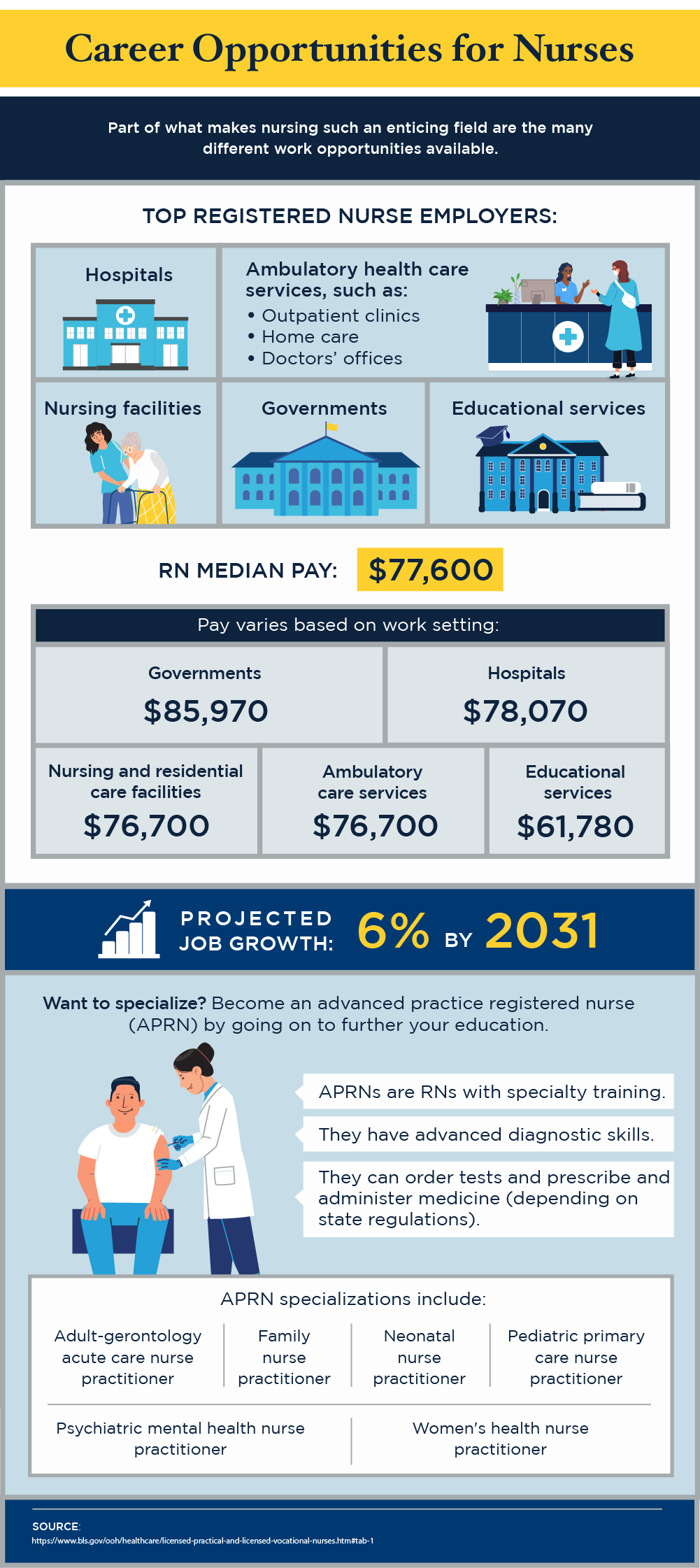
Besides being a great profession in itself, being a registered nurse puts you in a career field whose job opportunities are growing. Experts who evaluate the health care industry have been worried that there aren’t enough nurses to fill vacancies left by retiring nurses and to meet the need to care for a growing number of older adult patients who have multiple health problems.
As a result, the U.S. Bureau of Labor Statistics (BLS) predicts that the number of nursing jobs will grow by 5% for the ten-year period between 2024 and 2034. That’s an increase of more than 166,100 jobs.
When considering an ABSN vs. BSN, some students may be concerned that potential employers will not value a fast-track program as much as they would a degree from a traditional program, and questioning whether an accelerated nursing program is worth it. The AACN reports that broadly speaking, employers value graduates who have earned a second bachelor’s through accelerated programs more highly because they see these RNs as highly motivated and mature. They value these nurses’ prior work experiences, appreciating that they know how to work in organizations and are quick learners.
Financial Aid Options for ABSN Students
If you are interested in taking the next step in your career but have questions about how you will cover tuition costs, you are not alone. Elmhurst University is here to help connect you with a variety of resources to help ease the costs, including ABSN Scholarships.
There are a variety of types of aid that students can apply for based on financial need, including:
- Federal student aid
- Private scholarships and grants
- Nursing scholarships
- Private loans
- Military and veterans benefits
A variety of external resources can also provide additional financial aid to students. For example, the Illinois Department of Public Health has a robust scholarship program intended to help residents of Illinois who have demonstrated financial need secure funding to approved educational institutions.
Students may also wish to explore the ABSN scholarship opportunities available through organizations, such as the Nurse Corps or the Association of Perioperative Registered Nurses, which provide financial relief to students who meet various qualifications.
More on Tuition and Financial Aid
Accelerate Your Nursing Career with Elmhurst University Online RN Programs
If you have a bachelor’s degree in a non-nursing discipline and are ready to become a registered nurse, an accelerated nursing program may be worth it. The accelerated program offerings from Elmhurst University are:
- Academically strong and ethically driven
- A fast-track way to enter professional nursing
- Supportive of students with clinical placement services and NCLEX-RN test prep
Consider your options: Would the online Accelerated Bachelor of Science in Nursing or the online Master’s Entry in Nursing Practice be a better fit for your career plans? Through either program, you will be prepared for a successful nursing career that allows you to provide quality nursing care to individuals in your community.
Both programs are accredited by the Commission on Collegiate Nursing Education (CCNE), and Elmhurst University is regionally accredited by the Higher Learning Commission.
Elmhurst University is highly ranked among schools in its region by U.S. News & World Report:
- #7 Best Regional Universities Midwest (#1 in that category in Illinois)
- #3 Best Colleges for Veterans (Regional Universities Midwest)
- #14 Best Value Schools (Regional Universities Midwest)
- #3 Top Performers for Social Mobility
Learn how you can take the next step toward a career in nursing
Frequently Asked Questions
Both programs prepare graduates for registered nursing licensure, but an accelerated Bachelor of Science in Nursing builds on a prior bachelor’s degree and has a shorter, more intensive schedule. A traditional BSN generally follows a four-year undergraduate structure.
Working during an accelerated nursing program is generally discouraged because the compressed curriculum and clinical rotations require substantial time and attention. Students should review the expectations of their specific program before planning outside employment.
The main components are nursing coursework, hands-on skills practice during residency or simulation, supervised clinical rotations, and preparation for the NCLEX-RN examination. Together, these components develop academic knowledge and practical nursing competency.